

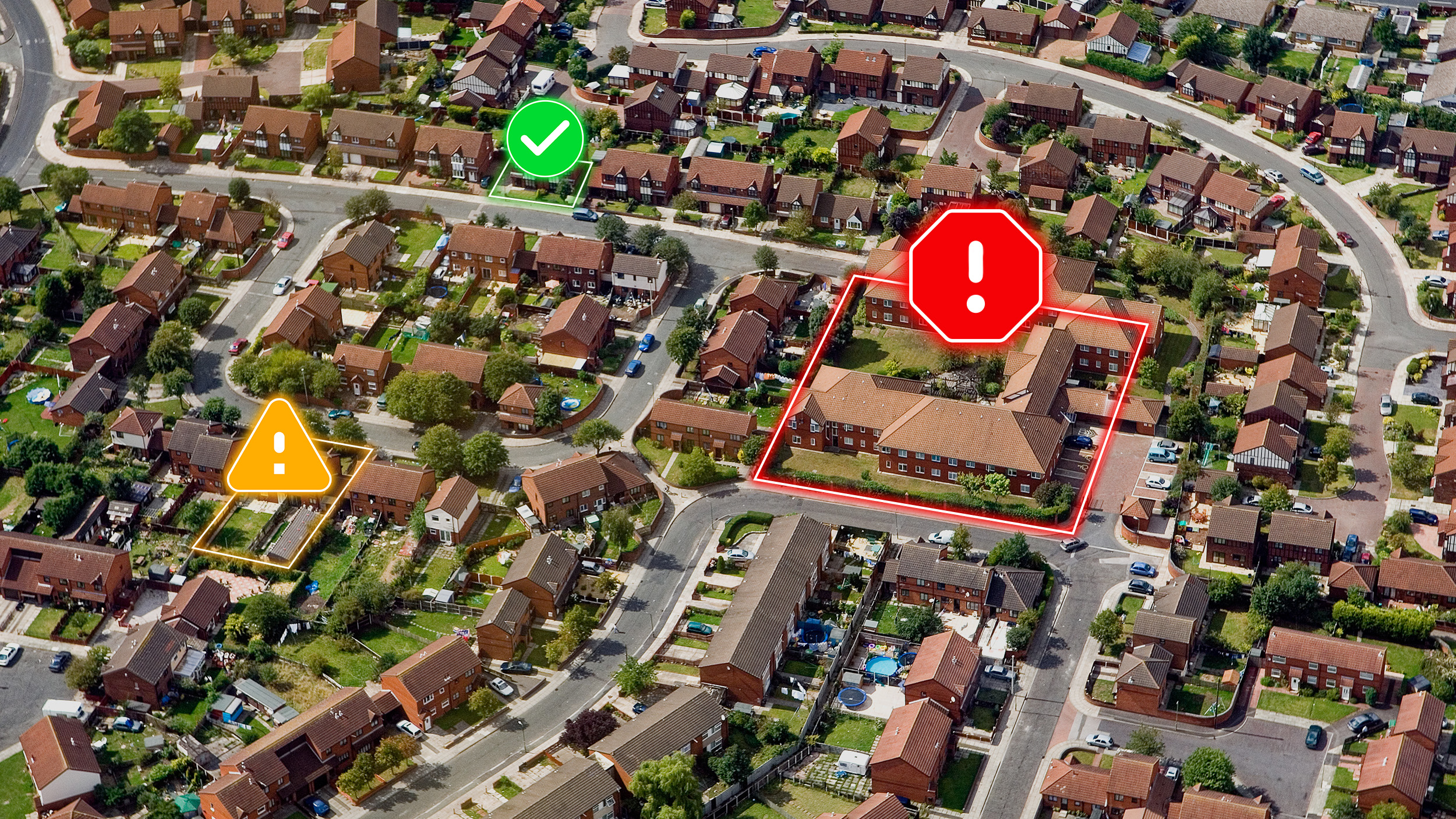
Radon is a naturally occurring radioactive gas that can enter homes from the ground. It is invisible, odourless and tasteless, meaning residents cannot detect its presence without measuring it.
With the Aico Ei1030 Radon Sensor and HomeLINK, housing providers can move from assumptions to evidence. Continuously monitor radon levels alongside temperature and humidity, understand conditions across your housing stock, and use data to support informed decisions that help protect resident health.
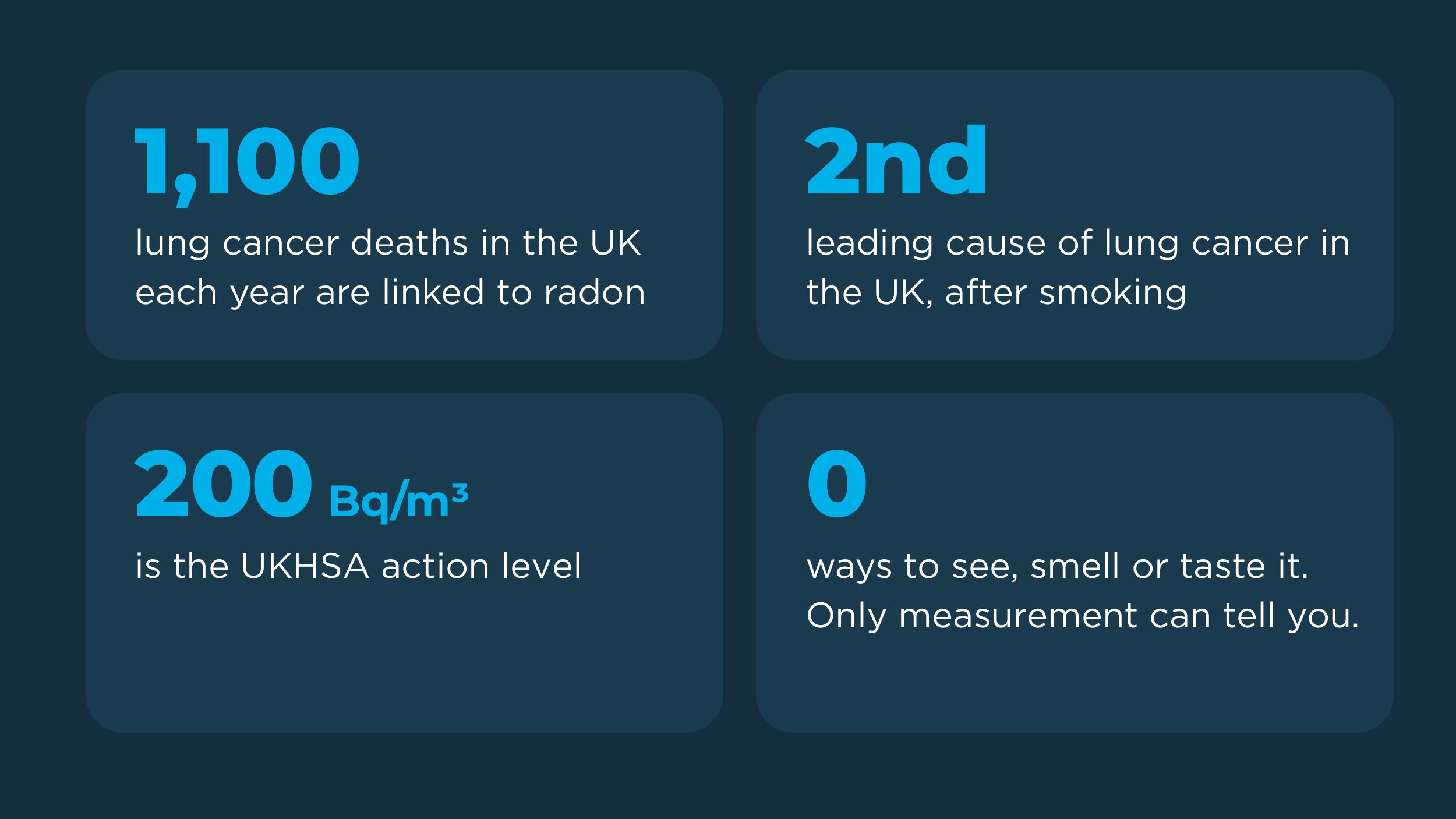
Radon is an invisible, odourless and tasteless radioactive gas, meaning elevated levels can go undetected without measurement.
Long-term exposure to high concentrations of radon increases the risk of developing lung cancer. In the UK, the Action Level for homes is 200 Bq/m³, measured as an annual average concentration.
However, there is no known level of radon exposure that is completely without risk. Radon is estimated to contribute to more than 1,100 lung cancer deaths each year in the UK, with over 85% of these deaths occurring in homes where radon concentrations are below 100 Bq/m³.
For housing providers, understanding and monitoring radon risk is therefore an important part of taking a proactive approach to protecting the health and safety of residents. By measuring radon levels, providers can identify properties at risk and take informed action where needed.
Traditional radon testing can provide a snapshot of conditions over a defined monitoring period. Continuous monitoring provides a different level of visibility.
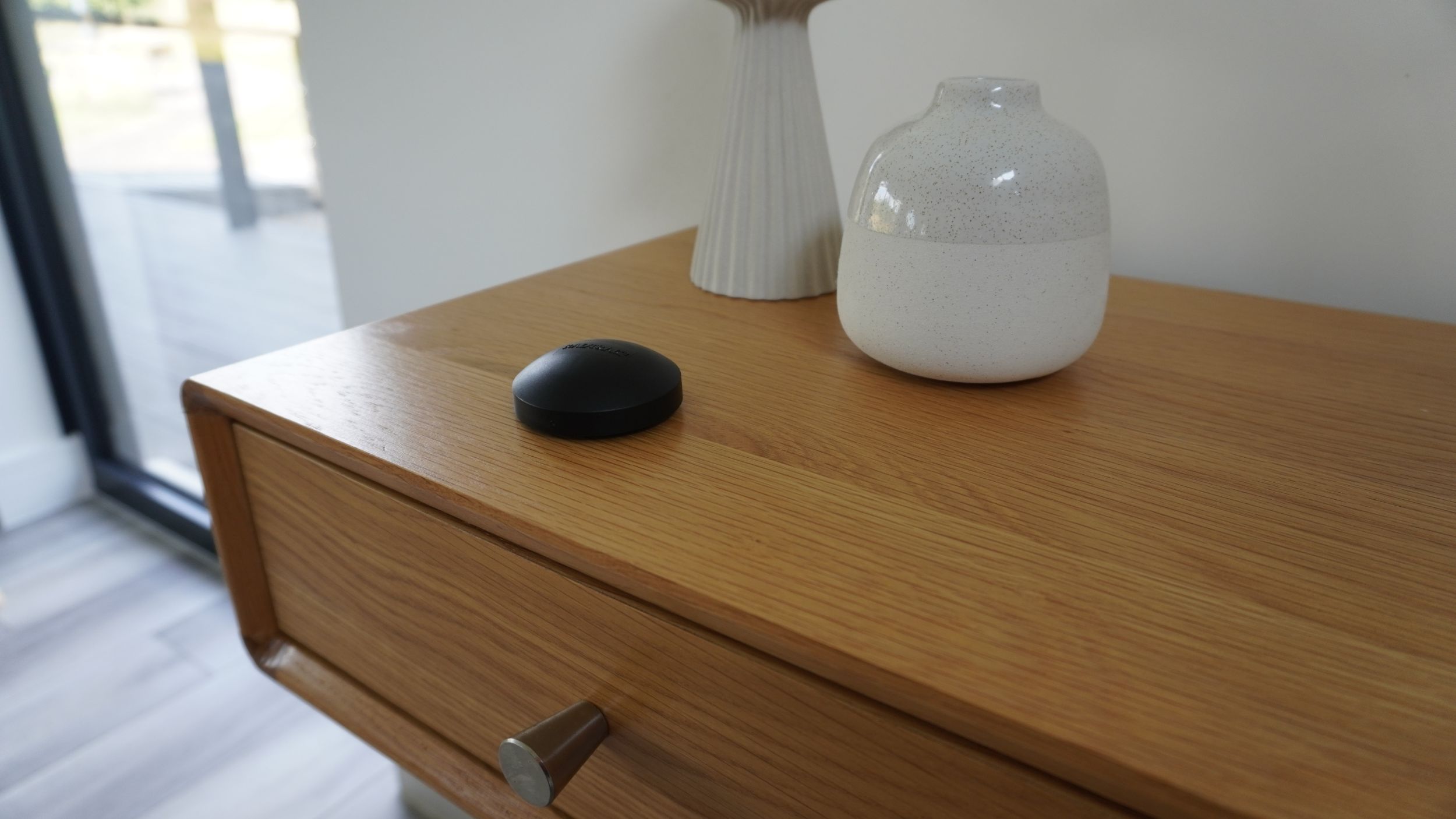
The Ei1030 Radon Sensor continuously monitors radon, temperature and humidity, capturing data every 15 minutes to build a clearer picture of conditions within a property.
Connected wirelessly to the Ei1000G SmartLINK Gateway, the sensor sends data to the HomeLINK Dashboard, giving housing providers greater visibility of radon levels across their properties.
This enables providers to identify properties requiring further investigation and make decisions based on measured conditions rather than assumptions.
Radon levels can vary significantly between properties, even within the same area. A property’s location, construction, condition and ventilation can all influence indoor radon concentrations. Weather can also play a role. Rainfall can saturate the ground and change how radon moves through the soil, potentially increasing the amount of radon that enters a building.
Radon maps can help identify areas where there is greater potential for elevated radon, but only measurement can establish the conditions within an individual property.
HomeLINK provides a centralised view of sensor data, helping housing providers understand where radon is being measured and identify properties where further attention may be required.

Managing a large housing portfolio can make it difficult to understand environmental conditions within individual properties.
Without appropriate monitoring, providers may have limited visibility of:
The Ei1030 provides a continuous stream of data, helping providers develop a more informed understanding of radon within their housing stock.
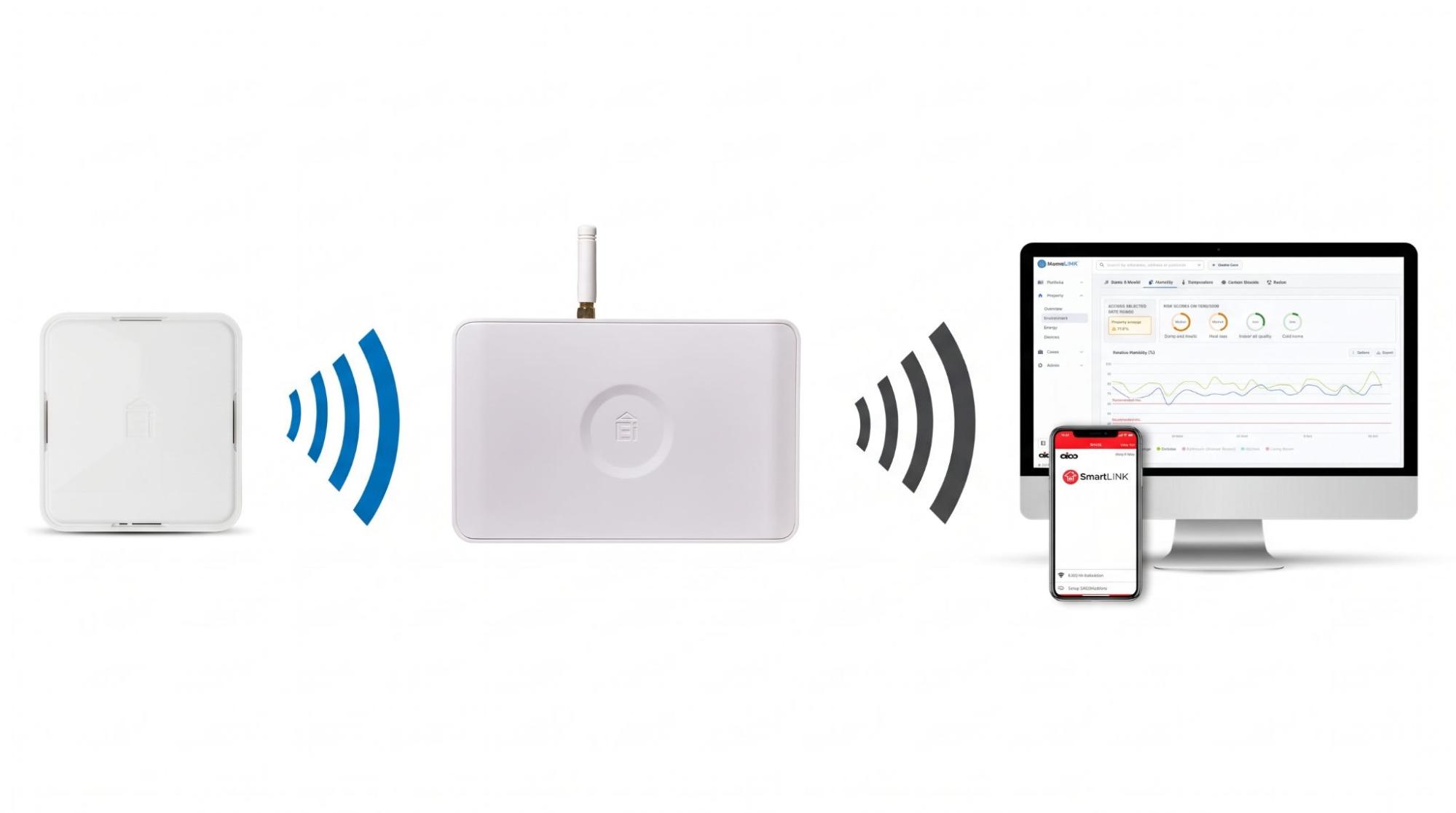
1. Measure
The Ei1030 continuously monitors radon, temperature and humidity within the property. Data is collected at regular intervals, helping build a detailed picture of environmental conditions over time.
2. Understand
The sensor connects to the Ei1000G SmartLINK Gateway, allowing data to be securely transmitted to the HomeLINK Dashboard. Housing providers can access property-level data and gain greater visibility of conditions across their connected housing stock.
3. Act
Use data to support evidence-based decisions around further investigation, resident communication, property assessment and remediation. Once action has been taken, continued monitoring can help providers understand the impact and support ongoing management.
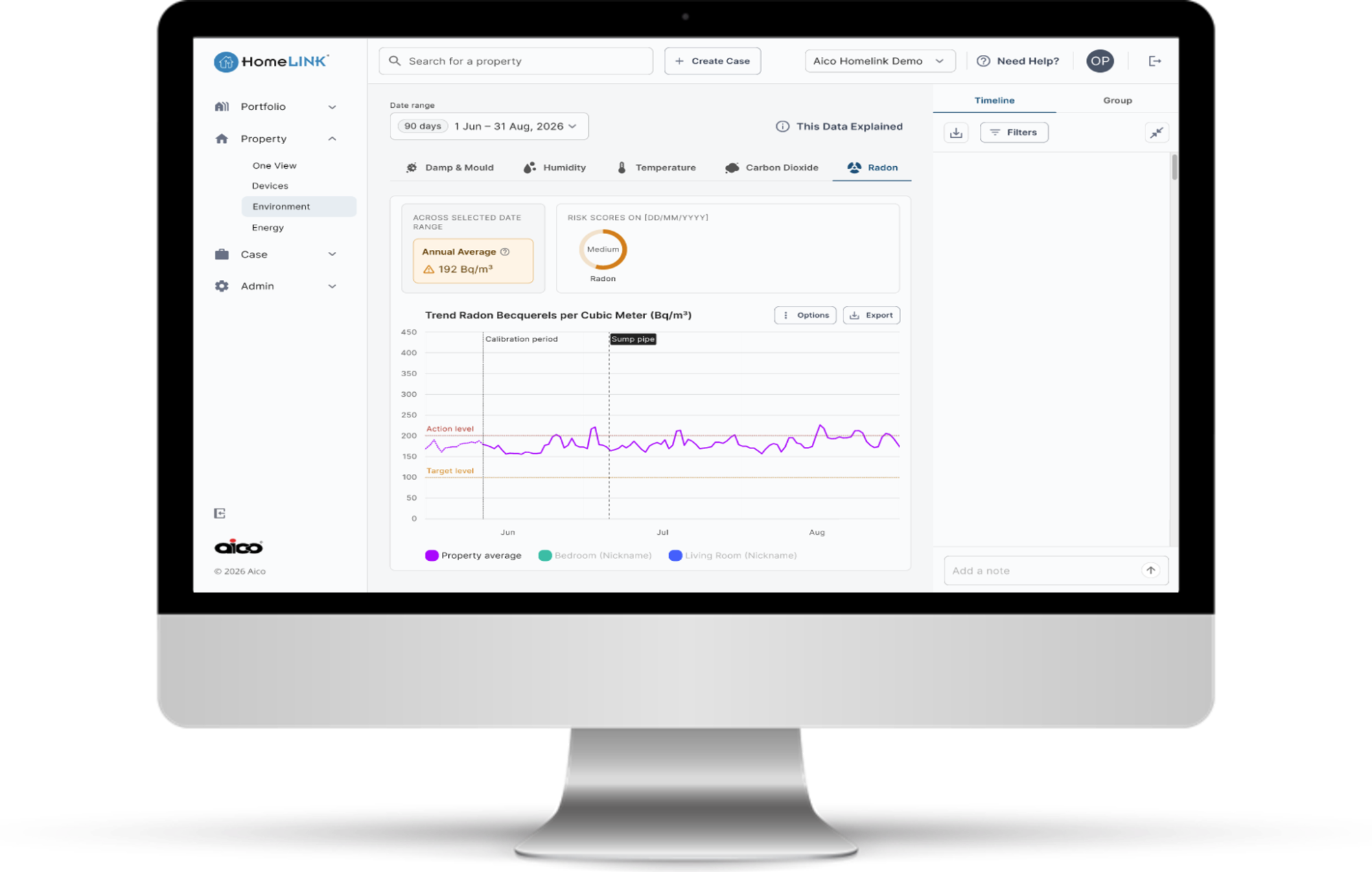
The Ei1030 forms part of Aico’s wider HomeLINK Connected Home Solution.
Working alongside the Ei1000G SmartLINK Gateway and HomeLINK Dashboard, connected sensors and devices bring data from individual properties into one central platform.
This gives housing providers the opportunity to move towards a more proactive approach to property management – using real-world data to identify risks, prioritise action and monitor outcomes.
Aico’s HomeLINK platform is already designed to provide landlords with remote visibility of property conditions and actionable insights across their housing stock.
Speak to our team to discover how the Ei1030 Radon Sensor and HomeLINK can help you measure radon, understand property conditions and take a more proactive approach to resident health.
In the UK, the Action Level for radon in homes is 200 Bq/m³ (becquerels per cubic metre), measured as an annual average. Where a home exceeds this, steps should be taken to reduce it. There is also a Target Level of 100 Bq/m³, which is the ideal outcome after remedial work. However, no level of radon exposure is completely without risk. Over 85% of the UK’s estimated 1,100+ radon-related lung cancer deaths each year occur in homes below 100 Bq/m³. This is why ongoing monitoring is valuable.
There is currently no blanket legal requirement for landlords in England or Wales to test every rental property for radon. However, radon is recognised as a potential housing hazard, and landlords have obligations to ensure their properties are safe and, in Wales, fit for human habitation. Testing is recommended for properties in radon-affected areas.
In England, Awaab’s Law is expected to expand in 2027 to cover the remaining hazards under the Housing Health and Safety Rating System, potentially strengthening requirements for social landlords to investigate and address significant radon-related hazards within specified timeframes.
Proactive monitoring helps housing providers understand radon risk across their housing stock, identify properties requiring further investigation and build an evidence base for informed decisions. The Ei1030 Radon Sensor, connected to HomeLINK, provides ongoing visibility of radon levels, helping housing providers take a more informed, data-driven approach to managing risk and protecting residents.
First, check whether high levels are sustained. The Action Level is based on an annual average, so continuous data helps confirm whether readings reflect a genuine ongoing issue. If levels are above 200 Bq/m³, plan remedial work with a radon specialist. Common methods include a radon sump, positive input ventilation, improved underfloor ventilation and sealing entry points. Once work is complete, keep monitoring to confirm the measures have reduced radon levels. For landlords, clear communication with residents throughout is important.